

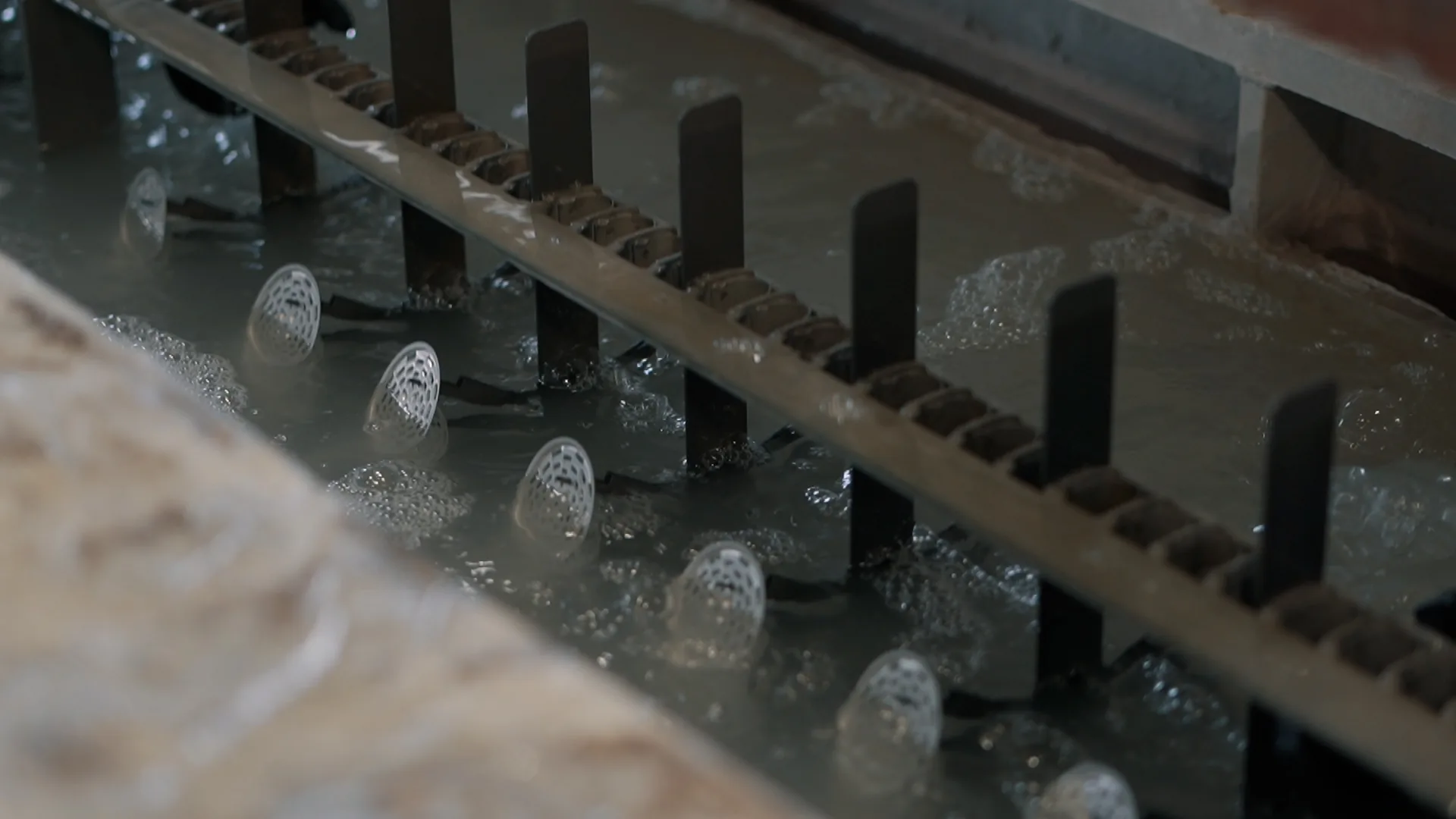
Electroless nickel plating
A uniform 5 to 50 µm layer, even on edges, in threads and holes. Hardness up to 1000 HK100 after heat treatment.
A uniform 5 to 50 µm layer, even on edges, in threads and holes. Hardness up to 1000 HK100 after heat treatment.




Electroless nickel plating is a process without electric current that forms a hard nickel-phosphorus layer on the steel surface, resistant to wear and corrosion.
The layer forms by a chemical reaction, not by electric current. That is why it does not build up on edges or thin out in holes, as is usual with electroplated nickel. We plate in the Mid-Phos version with a phosphorus content of 5 to 7 %, which combines hardness, wear resistance and corrosion protection. Electroless nickel plating is within the scope of our ISO 9001:2015 certificate.
Steel and iron alloys
Delivery in 5 to 10 working days
Parts up to 1500 × 1000 × 450 mm and 700 kg
Steel parts with complex geometry that need a uniform layer.
Functional parts that require hardness and wear resistance.
Parts that need corrosion protection of steel with a precisely calculable dimensional change.
Why choose electroless nickel plating
Find out in 30 seconds whether electroless nickel plating is the right choice for your part. If you are not sure, send us a drawing and a technician will advise you.
Complex part geometry
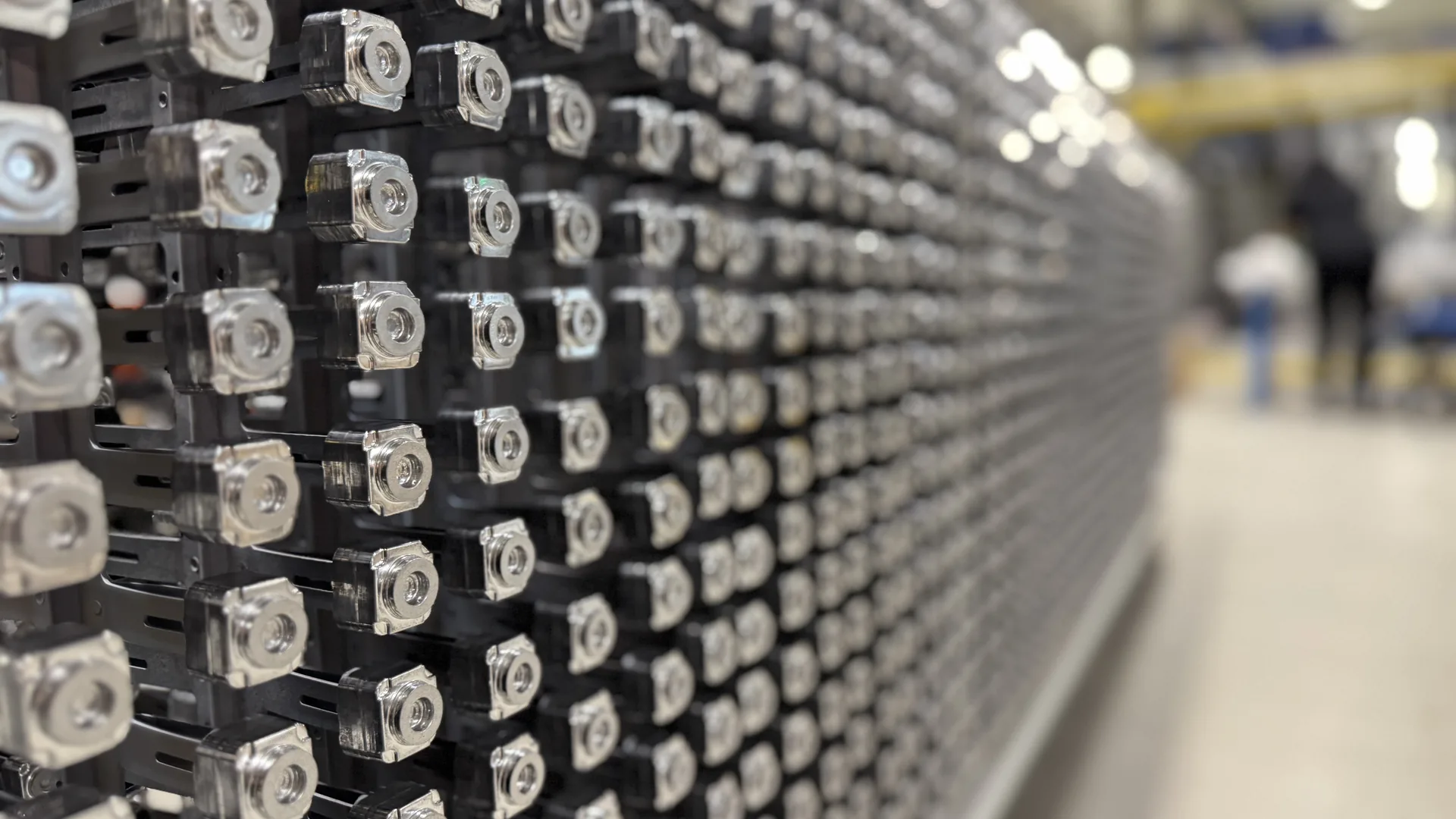
Your part has threads, blind holes or internal cavities. Nickel is deposited wherever the bath reaches, and the layer there is practically as thick as on a flat surface.
Hardness and wear resistance
You need a hard surface that withstands wear. As plated, the layer has a hardness of 600 to 700 HK100, after heat treatment 850 to 1000 HK100. Material loss in the wear test (TWI index) drops from 14 to 18 to 8 to 12.
Predictable dimensions
You need to protect a steel part against corrosion and keep its tolerances. The layer grows evenly, so you can include its thickness in the drawing in advance. We set it in the range of 5 to 50 µm; at 25 µm it withstands more than 96 hours in neutral salt spray (ASTM B117).
Results you
can measure
We do not give verbal ratings; we give measurable figures you can verify on your part.
max. hardness after heat treatment
After heat treatment the layer reaches 850 to 1000 HK100, without it 600 to 700 HK100.
in salt spray
At a layer thickness of 25 µm, NSS test to ASTM B117.
wear resistance
Wear resistance after heat treatment (a lower number means higher resistance). After plating 14 to 18 TWI.
Electroless nickel plating variants
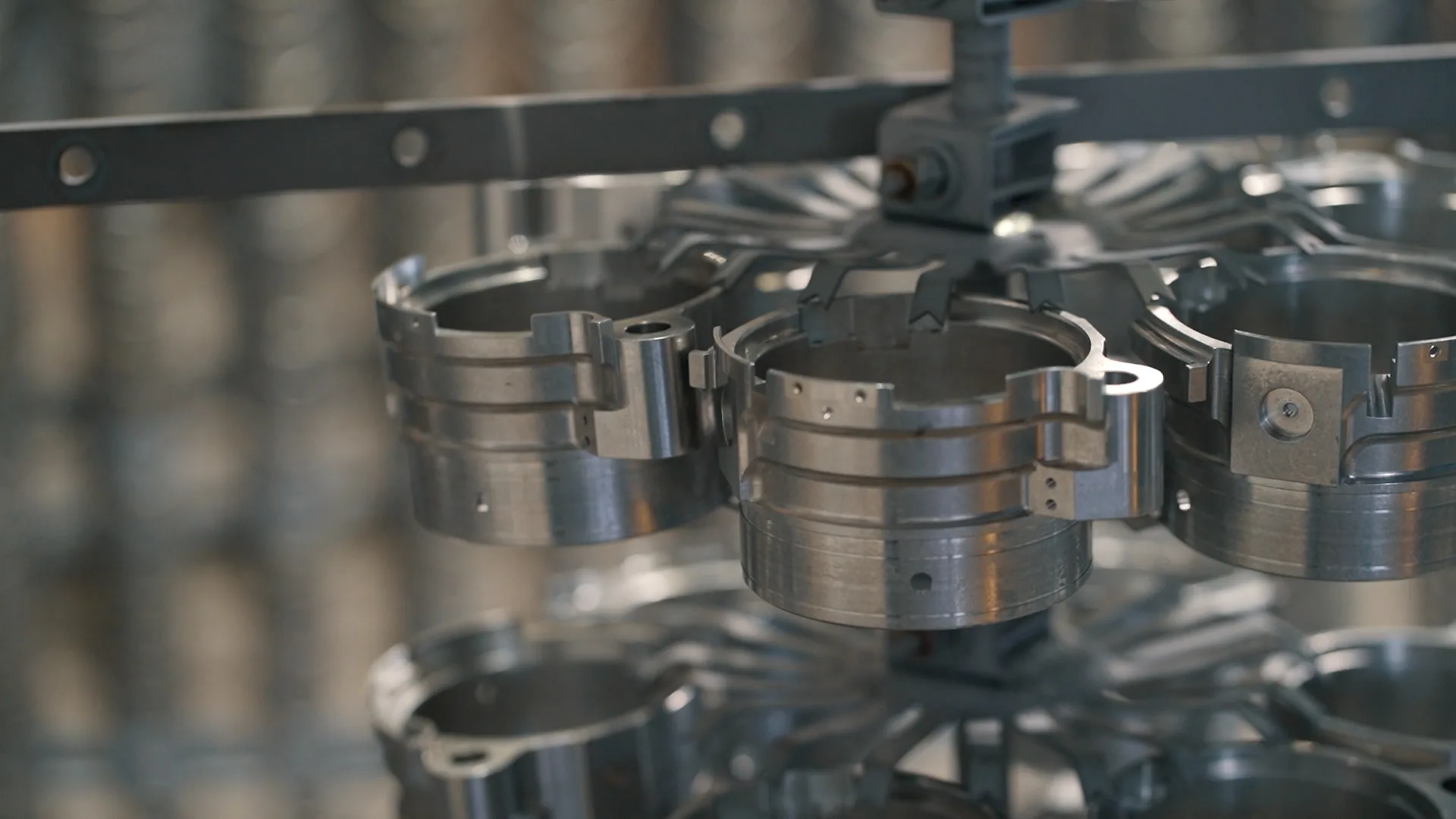
NiP Mid-Phos as plated
NiP Mid-Phos with heat treatment
Technical
specifications
Electroless nickel plating is a process without electric current: the layer is deposited by a chemical reaction, not by current. It therefore does not follow field lines and covers edges, corners, threads and the inside of holes as thickly as a flat surface. With electroplating, the layer builds up on edges and thins out in holes.
The basic material for plating is steel, or iron alloys. For steels with a hardness above 40 HRC and strength above 1290 MPa, internal stress must be relieved before plating, otherwise coating adhesion deteriorates.
As plated, 600 to 700 HK100. Heat treatment raises it to 850 to 1000 HK100. At the same time, wear resistance improves from 14 to 18 TWI to 8 to 12 TWI.
At a thickness of 25 µm, more than 96 hours in neutral salt spray to ASTM B117. A thicker layer gives higher resistance; we plate in the range of 5 to 50 µm.
1500 × 1000 × 500 mm and a weight of up to 700 kg. For larger or heavier parts, contact us and we will assess the options.
ISO 4527, AMS 26074 (MIL-C-26074), AMS 2405 and ASTM B-733. For every order we issue a certificate of the treatment performed.
Parts must be free of oils, emulsions and pastes. Products based on silicones, rapeseed oil, drying oils and waxes are not permitted. Remove steel swarf, especially from threaded blind holes. Mill scale must be removed mechanically or by blasting, and residues of the blasting media blown out with compressed air (watch out for blind holes and cavities); clean welds of scale and oxides. Parts must not be marked with paint or markers and must be free of residual magnetism, which attracts metallic contaminants. The full conditions are in the document Input conditions for the appearance and cleanliness of parts before NiP surface treatment (PR 05/01).
Yes, by the layer thickness. Unlike electroplating, the layer grows evenly over the whole surface, so it can be allowed for precisely in the tolerances. We set the layer thickness to your requirement in the range of 5 to 50 µm.



Where electroless nickel plating is used
We have completed hundreds of projects for demanding clients in Europe and beyond.

Automotive
Functional components requiring hardness, wear and corrosion resistance, without a thicker layer on edges that would change the fit. Show more
Defence
Steel parts exposed to abrasion and moisture where a coating to AMS 26074 (MIL-C-26074) is required. Show more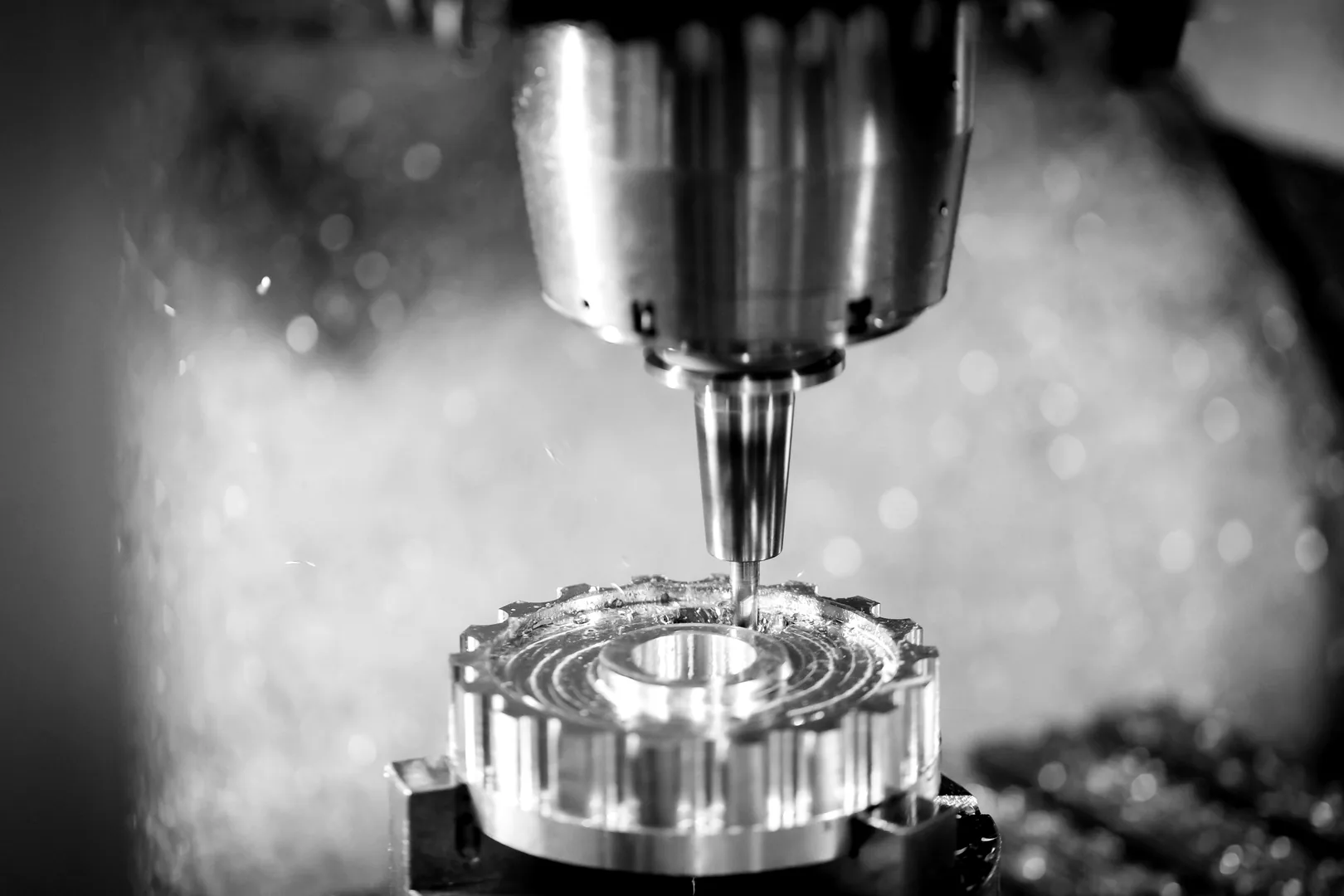
Engineering and electrical
Machine and equipment parts, such as hydraulic components, shafts and bushings, where hardness and precise dimensions after treatment are decisive. Show more