
Aluminium anodizing
Hardness up to 600 HV and layer thickness up to 80 µm. The surface turns into oxide that neither peels nor cracks.
Hardness up to 600 HV and layer thickness up to 80 µm. The surface turns into oxide that neither peels nor cracks.


Anodizing (anodic oxidation) is an electrochemical process in which a hard oxide layer is formed on the aluminium surface in a controlled way.
It is not a coating. The aluminium surface turns into aluminium oxide, which is firmly bonded to the base material and neither peels nor cracks. The layer stops further corrosion, is many times more resistant to wear and scratching than the original material, and its microporous structure can be filled with dye and sealed. A surface coloured this way is compact and cannot peel off.
Wrought aluminium alloys of the 1000, 5000 and 6000 series
Delivery in 5 to 10 working days
Parts from 10 mm to 3700 mm
Corrosion protection and high wear resistance without adding a coating
Electrically non-conductive surface; hard anodizing retains its insulating properties even at temperatures up to 500 °C.
Colouring and an optional surface texture; organic colouring does not change the part’s dimensions.
Why choose aluminium anodizing
Find out in 30 seconds whether anodizing is the right choice for your part. If you are not sure, send us a drawing. A technician will assess it and suggest a suitable treatment.
Corrosion protection
Your part works in an environment with moisture, salt or aggressive chemicals. The sealed anodic layer stops further corrosion and does not peel.
Long-lasting appearance
You need a uniform metallic or coloured surface that neither peels nor cracks. Electrolytic shades C31 to C35 have high UV stability and are suitable for outdoor use and façades.
Electrical insulation of the surface
You need an electrically non-conductive aluminium surface without adding another layer of coating, directly within the structure of the oxide layer.
Results you
can measure
We do not give verbal ratings; we give measurable figures you can verify on your part.
max. part length
We process parts up to 3700 × 1700 × 800 mm; the smallest part is 10 mm. We are among the processors with the largest capacity in Central Europe.
hard anodizing hardness
Hard anodizing reaches 370 to 600 HV depending on the alloy. The layer is formed electrochemically, without an additional coating.
hard layer thickness
Adjustable thickness of 10 to 80 µm for hard anodizing and 5 to 25 µm for clear anodizing. You choose the thickness according to the load on the part.

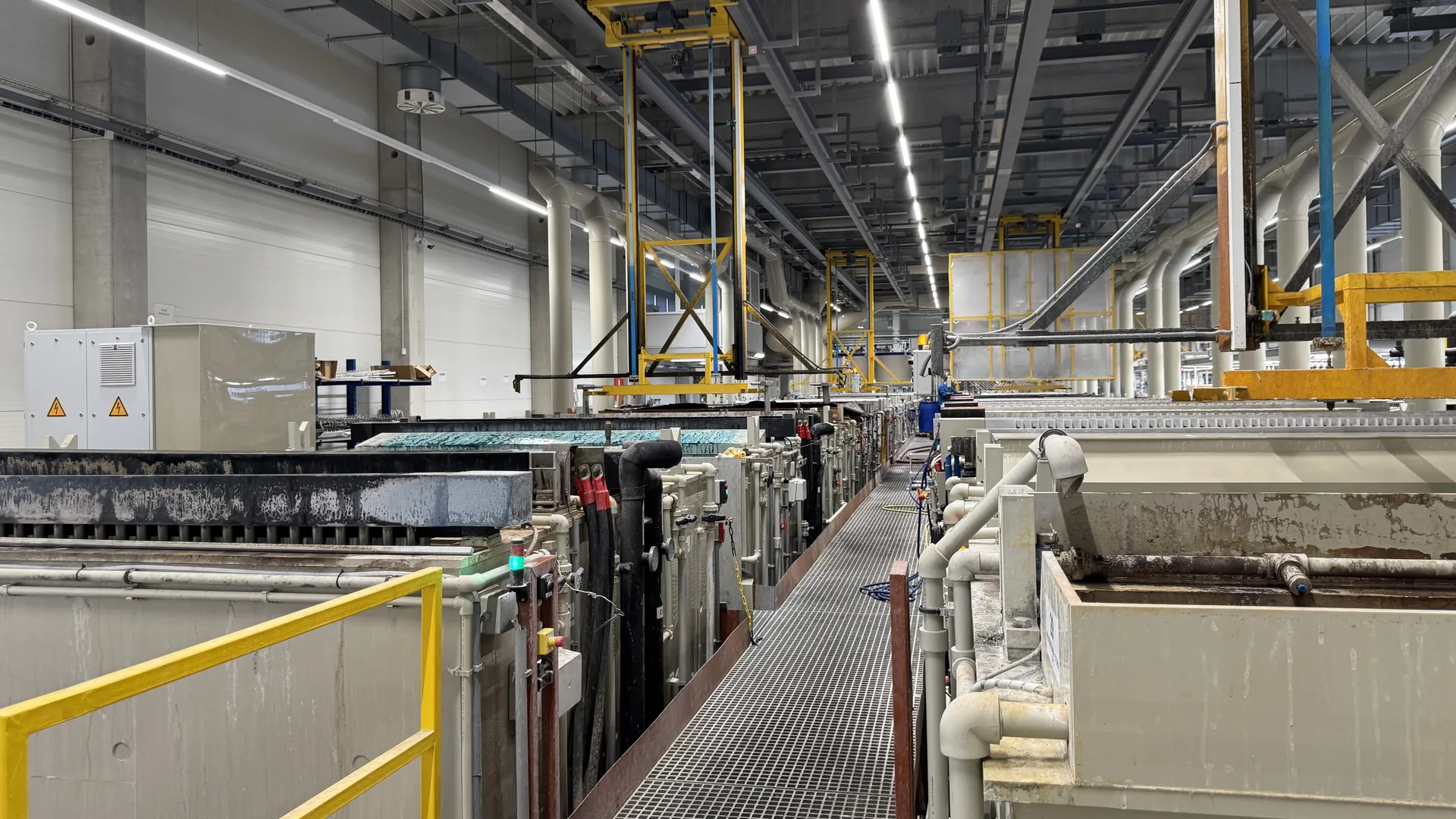
Anodizing process
Degreasing
Pickling
Anodizing
Colouring (optional)
Sealing
Technical
specifications
Clear anodizing forms a layer of 5 to 25 µm and is used mainly for corrosion protection and a decorative appearance. Hard anodizing forms a layer of 10 to 80 µm, is considerably harder and more wear-resistant and is used for functional, mechanically stressed parts. Hard anodizing changes the shade of the part depending on the alloy, from pale grey through olive green to dark brown. If you need exact values, see the Tech. specs tab.
No. The best results come from wrought alloys of the 1000, 5000 and 6000 series (EN AW-1050, 5083, 6060, 6082, 6063). Some 7000-series alloys can be processed after consultation. Cast aluminium with a high silicon content is unsuitable for standard anodizing; for high-pressure die castings we have developed a special process (Anodizing of castings). State the alloy type in your order: for some processes the material specification of the part is essential.
The maximum dimensions are 3700 × 1700 × 800 mm and the minimum part size is 10 mm. We are among the processors with the largest capacity in Central Europe. For larger parts, contact us and we will assess the options.
Yes, and you need to allow for it in the design. The oxide layer grows in both directions from the original surface, with the outward growth making up about 50 % of the layer thickness. With a 30 µm layer, a hole diameter decreases by 2 × 15 µm = 30 µm. Also allow for increased roughness, which we cannot estimate precisely in advance as it depends on the process conditions. The surface texture (E0, E6, polishing) also affects the dimensions.
Colours: black, gold in several shades, champagne, blue, orange, red and purple. Electrolytic shades C31 to C35 (from bronze to black) have high UV stability and are suitable for outdoor use and façades. We colour black, gold, champagne, blue and orange in tanks with a net size of 3200 × 1650 × 800 mm, red in 2000 × 1100 × 500 mm and purple in 950 × 300 × 950 mm. The surface can be fine matt (E0), matt (E6) or glossy after electrochemical polishing.
Yes, in two ways. Penetrated Teflon is hard anodizing impregnated with Teflon (PTFE 3 to 5 µm): the surface is slippery and the part’s dimensions do not change. Thermoset Teflon is a separate coating 10 to 50 µm thick, which on aluminium we apply over hard anodizing; some types are approved for food contact. You will find details in the Combined coatings and Non-stick coatings categories.
Parts must be free of oils, emulsions, pastes and swarf (especially threaded blind holes). Products based on silicones, rapeseed oil, drying oils and waxes are not permitted. Parts must not be marked with paint or markers, taped, or contain components made of metals other than aluminium. With leaking welds, residues of solutions will seep out of the gaps and impair the quality of the treatment; for hollow welded assemblies we recommend providing drainage through a technological hole. Do not pack parts in bubble wrap. You will find the full conditions in the document Conditions for the appearance and cleanliness of parts (PR 06/24).
The order and drawing documentation with the actual dimensions of the part, defined contact points and the marked visible surface; we need these to calculate the total surface area. If the contact point is not specified on the drawing, we choose it at our own discretion. State any requirement to protect holes, threads or surfaces directly in the order, not just on the drawing; masking is charged as a surcharge. We accept PDF, DWG, DXF, STEP and IGES. For every order we issue a certificate of the treatment performed; for aerospace and automotive we also issue extended quality documents on request.

Where anodizing is used
We have completed hundreds of projects for demanding clients in Europe and beyond.

Aerospace and defence
We are an approved supplier to the aerospace and arms industries for anodic oxidation of aluminium. Cockpit components, structural elements and precision parts for approved Tier 1 and Tier 2 suppliers. Show more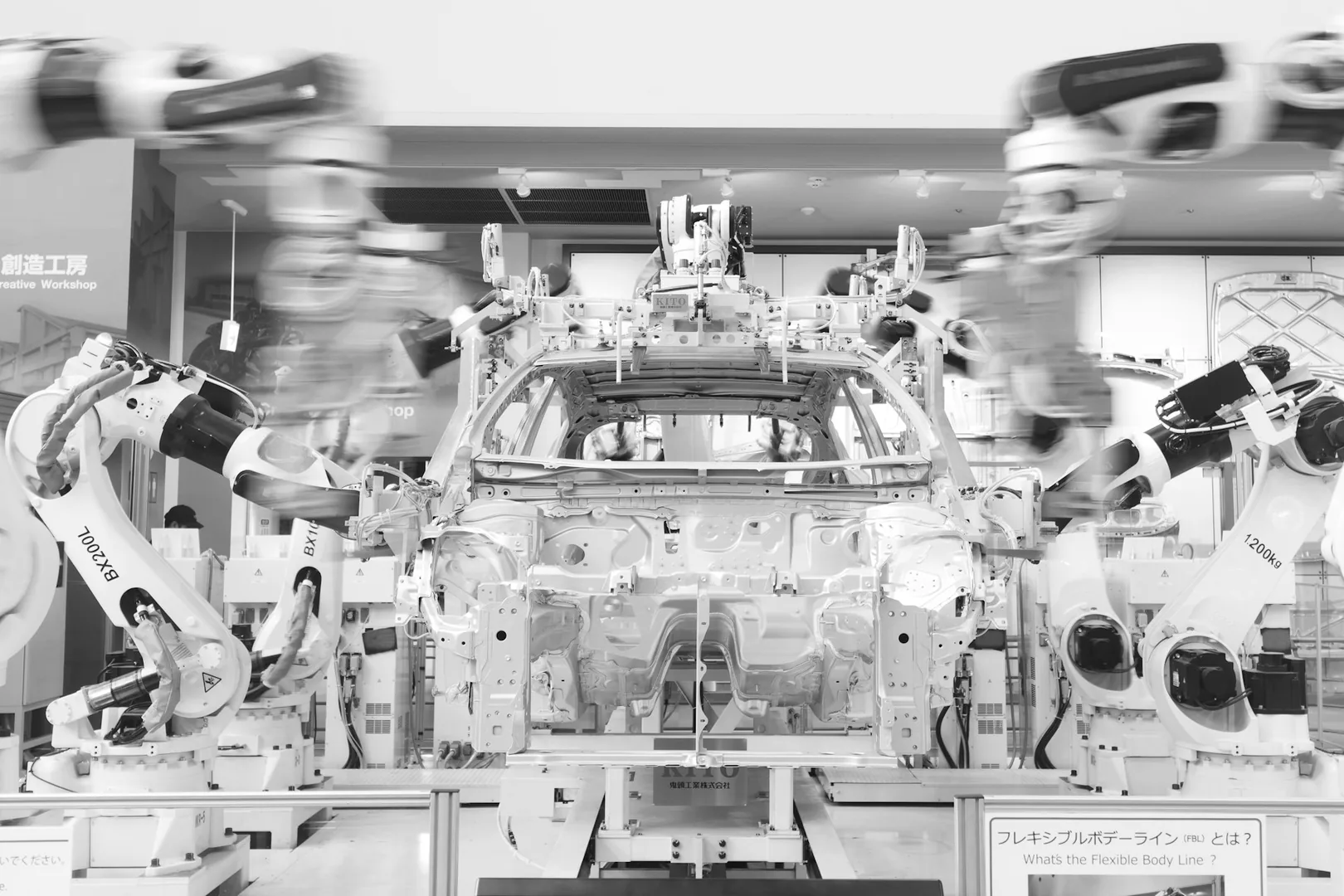
Automotive
Exterior and interior parts and functional components with high resistance to corrosion and wear. Show more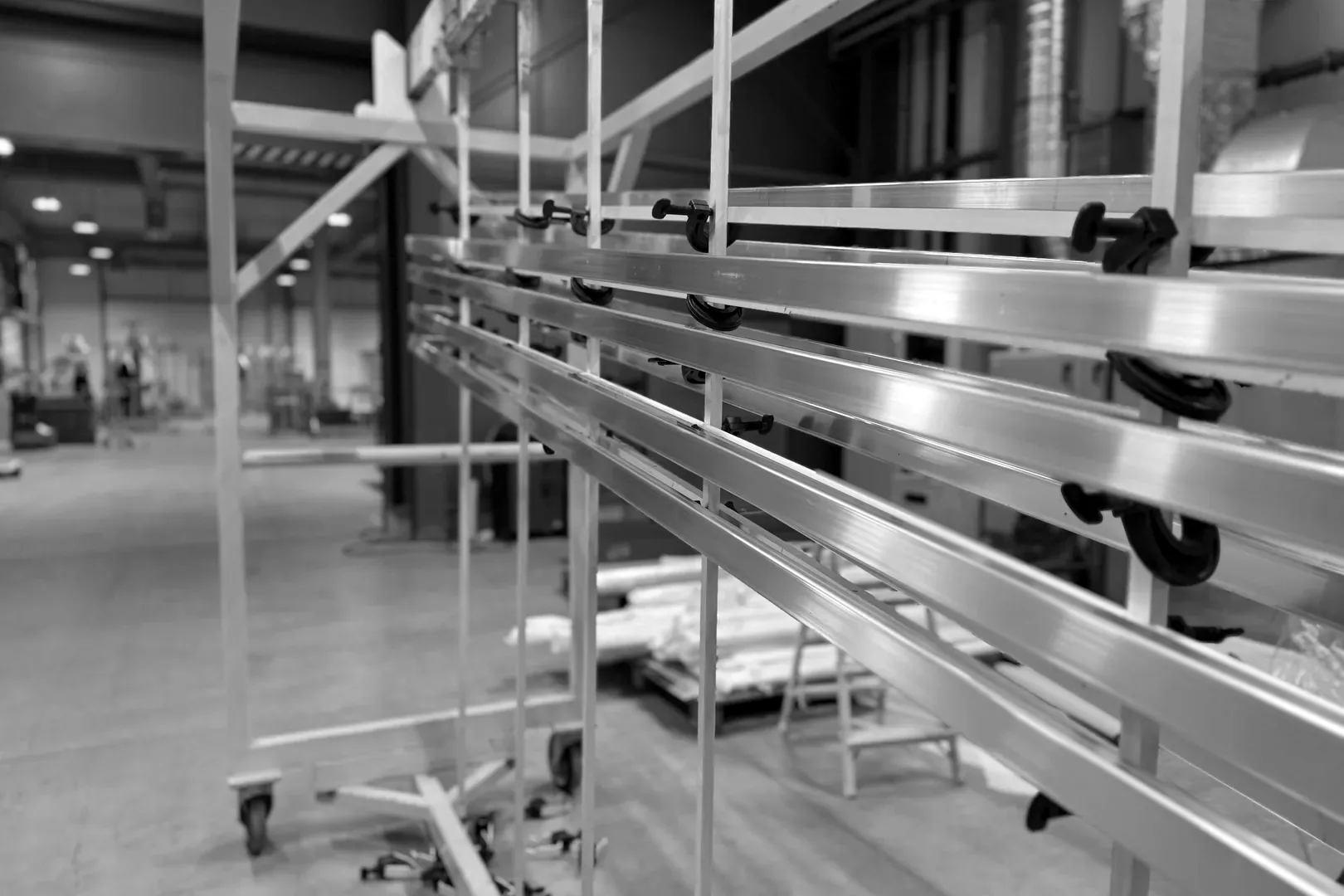
Construction
Façade profiles, architectural elements and components with a long service life outdoors, class 20 clear anodizing and UV-stable electrolytic shades C31 to C35. Show more